Sarkari List : Page 12

Explore Government Lists - Latest and Updated

Nepal Social Media Ban List – Full Details of the 26 Apps Banned in 2025

Nepal Social Media Ban List

The Nepal Social Media Ban List 2025 reflects the government’s firm stance on regulating global tech giants within its borders. While it has sparked debate, the move underlines the country’s effort to enforce digital accountability and sovereignty. Whether these bans are temporary or long-term will depend on how quickly companies comply with Nepal’s registration laws. Nepal has taken a bold step by banning 26 popular social media apps for operating without registering with the government. The decision was made after a high-level meeting chaired by Communication and Information Technology Minister Prithivi Subba Gurung, alongside officials from the Nepal Telecommunication Authority, telecom operators, and internet service providers. The government had set a seven-day deadline for mandatory registration, which expired last week. Since many platforms failed to comply, apps like Facebook, Instagram, YouTube, and X (formerly Twitter) were banned with immediate effect. Interestingly, some apps like Viber, TikTok, Wetalk, and Nimbuzz were exempt as they had completed registration. Others such as Telegram are still in the process of getting approval. Key Highlights of Nepal Social Media Ban List Event Details Decision Taken By Ministry of Communication & Information Technology Key Minister Involved Prithivi Subba Gurung Reason for Ban Failure to register with Nepalese Government Deadline for Registration 7 days (expired last week) Total Apps Banned 26 Exempted Apps Viber, TikTok, Wetalk, Nimbuzz Under Registration Telegram, Global Diary Prime Minister’s Statement “National independence is greater than the loss of jobs of a handful of individuals.” List of 26 Banned Social Media Apps in Nepal Facebook Messenger Instagram YouTube WhatsApp X (formerly Twitter) LinkedIn Snapchat Reddit Discord Pinterest Signal Threads WeChat Quora Tumblr Clubhouse Mastodon Rumble VK Line IMO Zalo Soul Hamro Patro BeReal (reported by some sources) Why Did Nepal Ban Social Media Apps? According to the Kathmandu Post, the ban was introduced because several major platforms failed to comply with the directive to register locally. The government has repeatedly urged social media companies to set up offices in Nepal and follow its laws. Despite many warnings, companies did not take steps to formalize operations, leading to this decision. Prime Minister KP Sharma Oli defended the move, emphasizing that national independence and sovereignty must come before business or individual interests. Impact of the Ban This ban directly affects millions of social media users in Nepal who rely on these platforms for communication, entertainment, and business. While critics argue it limits freedom, the government insists the move is necessary to regulate digital platforms and protect national interests. Businesses that heavily depend on apps like Facebook Ads or Instagram Marketing may face significant challenges until clarity on registration is provided.

Two Wheeler GST Rate List – New Updated GST Rates 2025

Two Wheeler GST Rate List

The Two-Wheeler GST Tax Rate List 2025 has brought big relief to the majority of bike buyers in India by reducing the rate for sub-350cc bikes. At the same time, premium motorcycles will get costlier due to the higher tax rate. The GST cut on electric bikes will further strengthen India’s EV revolution. If you’re planning to buy a two-wheeler, waiting until after 22nd September 2025 could save you a lot of money, especially for commuter motorcycles. In this article, we will explain the updated GST rates for two-wheelers in 2025, how these changes will impact customers and manufacturers, and what you need to know if you are planning to buy a bike soon. Updated Two-Wheeler GST Rate List 2025 The government has introduced a two-tier GST structure for motorcycles, keeping affordability in mind for the majority of buyers while increasing the tax burden on high-end bikes. Category GST Rate (2025) Previous Rate Notes Bikes below 350cc 18% 28% Big relief for 98% of India’s two-wheeler market Bikes above 350cc 40% 31% Considered “sin tax”, impacts premium bikes like Royal Enfield Electric two-wheelers 5% 12% Encouragement for EV adoption Bike insurance 18% 18% No change Spare parts (brake pads, clutch cables, gauge oil) 28% 28% No change Updated New GST Rates 2025 GST on Motorbikes Earlier, all two-wheelers with engine capacity less than 350cc were taxed at 28%, while those above 350cc attracted 31% (including cess). With the new GST rule effective from 22nd September 2025, bikes under 350cc will now be much cheaper, as their tax rate is reduced to 18%. On the other hand, premium bikes with engines above 350cc will see a steep increase to 40% GST. This move will impact brands like Royal Enfield, Harley-Davidson, and Kawasaki, which sell higher capacity motorcycles. GST on Electric Bikes The government has kept the GST on electric two-wheelers at just 5%, one of the lowest tax slabs. This is done to encourage eco-friendly transport, reduce dependence on petrol, and promote sustainable commuting. For consumers, this makes electric scooters and bikes an affordable and practical option for daily use. Impact of New GST on Two-Wheeler Industry Positive for mass buyers: Most Indians buy bikes under 350cc. The GST cut from 28% to 18% will bring prices down, boosting sales. Negative for premium segment: Bikes above 350cc will now become costlier, affecting brands like Royal Enfield, Triumph, and KTM. Boost for EVs: The low 5% GST on electric bikes is expected to accelerate EV adoption. Festive season push: With the new rates effective from 22nd September 2025, the industry is expecting one of the best festive seasons in years. Why Did the Government Change GST on Bikes? The government wanted to balance affordability with luxury taxation. Since nearly 98% of bikes sold in India are below 350cc, the reduction to 18% directly benefits middle-class buyers. At the same time, premium motorcycles are being treated as luxury goods with the 40% “sin tax”, similar to how luxury cars are taxed.

Latest GST Reduction List 2025- Updated New Lower Tax Rates on Goods & Services

GST Reduction List

GST Reduction List : The GST Council of India has approved a major GST rate cut in its latest meeting held on September 4, 2025. The revised GST slabs will come into effect from September 22, 2025. The previous four-slab structure of 5%, 12%, 18 %, and 28% has been simplified to just two slabs – 5% and 18%. A special 40% GST slab will apply only to luxury and harmful goods. GST Reduction List 2025 - Items That Will Become Cheaper Here is the complete new GST reduction list of all goods and services that will become cheaper after the new GST rates are applied. Food & Beverages Item CategoryOld GST RateNew GST RateChapati, Paranthas5%0% (Nil)UHT Milk, Paneer, Pizza Bread, Khakra5%0% (Nil)Butter, Ghee, Dry Nuts, Jam, Ice Cream, Corn Flakes etc.18%5%Cheese, Other Fats12%5%Plant based and Soya Milk Drinks12-18%5%Namkeen, Condensed Milk and Biscuits18%5% Household & Personal Care Items Item CategoryOld GST RateNew GST RateToothpaste, Tooth Powder, Shampoo18%5%Soap, Hair Oil, Face Powder18%5%Feeding Bottles, Utensils, Combs18%5%Kitchenware, Tableware, Umbrellas18%5% Stationery Items GST Reduction List ItemOld GSTNew GSTMaps, Charts, Globes12%NilPencils, Crayons, Sharpeners, Erasers5-12%NilExercise Books12%Nil Healthcare & Medicines Item NameOld GSTNew GSTLife-saving Drugs, Medical Equipment12–18%5% or NilThermometers, Diagnostic Kits, Oxygen18%5%Spectacles, Glucometer, Test Strips12%5% Vehicles & Auto Components New GST Rate List Vehicles CategoryOld GSTNew GSTMotorcycles ≤ 350cc28%18%Small Hybrid Cars28%18%Electric Vehicles (EVs)5%5% (No Change)Auto Components28%18%Petrol/Diesel/CNG Vehicles < 1200cc or < 4000 mm Length 28%18% Construction & Appliances Item CategoryOld GST RateNew GST RateCement28%18%Air Conditioners, Dishwashers, TVs28%18%Sewing Machines & Parts12%5% Footwear & Textiles GST Reduction New List ItemOld GSTNew GSTFootwear & Garments12%5% Agriculture & Fertilizers New GST Rate List Item CategoryOld GST RateNew GST RateTractors (below 1800cc), Agricultural Machinery12-18%5%Fertiliser Inputs (e.g., Sulphuric Acid)18%5%Biopesticides & Neem-Based Pesticides12%5%Tractor Components18%5% Insurance & Hotel Industry Item CategoryOld GST RateNew GST RateIndividual Life & Health Insurance18%0%Goods Carriage Insurance (Third Party)12% (with ITC)5% (with ITC)Hotel Rooms ≤ ₹7,50012% (with ITC)5% (No ITC)Economy Class Air Tickets5%5% (No Change) Beauty & Wellness Services The GST rate for services like salons, gyms, yoga centres, and barbershops has been reduced from 18% to 5%, but input tax credit (ITC) will not be available under the new rate. High-Tax Items (40% GST Slab) Aerated, caffeinated & carbonated drinks (Pepsi, Coke, etc.) All sugary/flavoured beverages High-end cars (above 1,200cc and 4,000mm) Motorcycles above 350cc Yachts and private jets Race cars, IPL tickets Gambling, betting, casinos, race clubs Tobacco & related products (after COVID-cess ends) GST Reduction List PDF Download Complete New GST Rate List PDF from Below link. https://www.pib.gov.in/PressNoteDetails.aspx?NoteId=155151&ModuleId=3 Read: GST State Code List

PMFBY Beneficiary List – Pradhan Mantri Fasal Bima Yojana

PMFBY Beneficiary List

The Pradhan Mantri Fasal Bima Yojana (PMFBY) was launched by the Government of India in 2016. It is one of the biggest crop insurance schemes in the world and is designed to provide financial protection to farmers against crop losses. Under this scheme, farmers are protected from risks such as drought, floods, unseasonal rains, pests, crop diseases, cyclones, and other natural calamities. The PMFBY Beneficiary List is the official list of farmers who are enrolled under the scheme and are eligible to receive insurance benefits in case of crop damage. This list is updated regularly by state governments and insurance companies to ensure that only genuine farmers get covered. Highlights of PMFBY Beneficiary List Particulars Details Scheme Name Pradhan Mantri Fasal Bima Yojana (PMFBY) Launched In 2016 Objective Provide affordable crop insurance and protect farmers against crop loss Eligibility All farmers including sharecroppers and tenant farmers Coverage Crop loss due to natural calamities, pests, diseases, unseasonal rains, etc. Motto One Nation, One Crop, One Premium Beneficiary List Published online by State Governments and Insurance Companies Premium Subsidy Shared between Central and State Government GST Exempted What is the PMFBY Beneficiary List? The beneficiary list is the official record of all farmers who have successfully enrolled in the scheme. Farmers whose names appear on this list are entitled to claim compensation if their crops are damaged due to natural risks or unforeseen conditions. This list ensures transparency and helps farmers verify whether their applications under PMFBY are accepted. It also allows state governments to track coverage and provide timely assistance. Objectives of Pradhan Mantri Fasal Bima Yojana The Pradhan Mantri Fasal Bima Yojana has multiple objectives, including: To provide financial assistance to farmers for crop loss. To stabilize farmers’ income so they can continue farming. To encourage farmers to adopt modern agricultural practices. To make crop insurance affordable and easy to access. To ensure the competitiveness of Indian agriculture in global markets. To safeguard farmers against production risks. Who Can Be in the Beneficiary List? All farmers growing notified crops in notified areas can be part of the PMFBY beneficiary list, provided they enroll under the scheme. Loanee Farmers – Farmers who have taken a crop loan from any financial institution are automatically covered unless they submit a declaration to opt out. Non-Loanee Farmers – Farmers who do not take loans but still wish to get covered need to submit valid land documents such as Records of Right (RoR), Land Possession Certificate (LPC), or lease agreements in case of sharecroppers or tenant farmers. Coverage Under PMFBY PMFBY covers different stages of crop and risks that may occur: Standing Crop (Sowing to Harvesting) – Covers yield losses due to drought, floods, pests, diseases, hailstorm, cyclone, etc. Prevented Sowing – If more than 75% of the crop area could not be sown due to adverse weather, farmers get 25% of the sum insured. Mid-Season Adversity – If expected yield is less than 50% due to drought, floods, or prolonged dry spells, farmers get 25% of likely claims. Post-Harvest Losses – Crops damaged within 14 days of harvesting due to cyclonic rains, hailstorms, or unseasonal rains. Localized Calamities – Covers losses due to localized risks such as landslides, hailstorms, or cloudbursts. How to Check the PMFBY Beneficiary List? Farmers can check whether their names are included in the PMFBY Beneficiary List through the following steps: STEP 1: Visit Pradhan Mantri Fasal Bima Yojana official website https://pmfby.gov.in. STEP 2: Go to the "Farmer Section" and log in using your details. PMFBY Farmer Login STEP 3: Select your state, district, block, season, and year. STEP 4: ...

Andhra Pradesh CMs List – Complete Details from 1956 to Present

Andhra Pradesh CMs List

Andhra Pradesh CMs List : The Chief Minister of Andhra Pradesh is the head of the state government and plays the key role in decision-making, policy formation, and administration. While the Governor is the official head of the state as per the Indian Constitution, the real executive powers rest with the Chief Minister. Since the formation of Andhra Pradesh in 1956, the state has seen 19 Chief Ministers from various political parties, with most early leaders coming from the Indian National Congress (INC). Over time, the Telugu Desam Party (TDP) and YSR Congress Party (YSRCP) have also held power. Highlights of Andhra Pradesh Chief Ministers Feature Details First CM (Andhra State) Tanguturi Prakasam (1953) – INC First CM (Andhra Pradesh) Neelam Sanjeeva Reddy – INC Current CM N. Chandrababu Naidu – TDP (since 12 June 2024) Longest-serving CM N. Chandrababu Naidu – over 13 years in multiple terms Shortest tenure N. Bhaskara Rao – 31 days First Non-INC CM N. T. Rama Rao – TDP President’s Rule Imposed 3 times, latest in 2014 Capital Amaravati (shifted from Hyderabad in 2017) Assembly Constituencies 175 A Brief History of Andhra Pradesh CMs The journey began in 1953 with Tanguturi Prakasam as the CM of the then Andhra State. In 1956, after the States Reorganisation Act, Neelam Sanjeeva Reddy became the first CM of the newly formed Andhra Pradesh. Through the decades, Andhra Pradesh witnessed leaders with distinct governance styles: Kasu Brahmananda Reddy (INC) served for over 7 years, focusing on industrial growth. P. V. Narasimha Rao, later Prime Minister of India, also served as CM here. N. T. Rama Rao (TDP), a popular film actor, brought in major political change as the first non-Congress CM. N. Chandrababu Naidu (TDP) became known for his IT-focused reforms and holds the record for the longest tenure. Y. S. Rajasekhara Reddy (INC) is remembered for his welfare schemes and farmer-friendly policies. The bifurcation of Telangana in 2014 reduced the assembly constituencies from 294 to 175. Post-bifurcation, N. Chandrababu Naidu returned as CM, followed by Y. S. Jagan Mohan Reddy (YSRCP) in 2019. In June 2024, Naidu once again took office. Andhra Pradesh CMs List Below the list of Andhra Pradesh Chief Ministers (1956 – Present): S.No. Name Party From To Duration 1 Neelam Sanjeeva Reddy INC 1 Nov 1956 11 Jan 1960 3 years, 71 days 2 Damodaram Sanjivayya INC 11 Jan 1960 12 Mar 1962 2 years, 60 days 3 Kasu Brahmananda Reddy INC 21 Feb 1964 30 Sept 1971 7 years, 221 days 4 P. V. Narasimha Rao INC 30 Sept 1971 10 Jan 1973 1 year, 102 days 5 Jalagam Vengala Rao INC 10 Dec 1973 6 Mar 1978 4 years, 86 days 6 Marri Chenna Reddy INC 6 Mar 1978 10 Oct 1980 2 years, 218 days 7 Tanguturi Anjaiah INC 11 Oct 1980 24 Feb 1982 1 year, 136 days 8 N. T. Rama Rao TDP 9 Jan 1983 16 Aug 1984 1 year, 220 days 9 N. Bhaskara Rao TDP 16 Aug 1984 16 Sept 1984 31 days 10 N. Chandrababu Naidu TDP 1 Sept 1995 13 May 2004 8 years, 255 days 11 Y. S. Rajasekhara Reddy INC 14 May 2004 2 Sept 2009 5 years, 111 days 12 N. Kiran Kumar Reddy INC 25 Nov 2010 1 Mar 2014 3 years, 96 days 13 N. Chandrababu Naidu TDP 8 Jun 2014 29 May 2019 4 years, 355 days 14 Y. S. Jagan Mohan Reddy YSRCP 30 May 2019 11 Jun 2024 5 years, 12 days 15 N. Chandrababu Naidu TDP 12 Jun 2024 Incumbent Ongoing Notable Facts About ...

7 Days Loan Apps List – Instant Short-Term Loan Apps in India

7 Days Loan Apps List

A 7 days loan app is a digital lending application that offers short-term personal loans with a repayment period of 7 days. The loan amounts are usually small (₹500 to ₹20,000) and are meant to solve short-term cash problems.Unlike traditional loans, these require minimal documentation, quick approval, and no branch visits. Highlights of 7 Days Loan Apps Feature Details Loan Tenure 7 days Loan Amount Range ₹500 – ₹20,00,000 (varies by app) Approval Time Minutes to a few hours Process 100% Digital, App-based Collateral Not required Ideal For Emergency bills, short-term expenses, salary advances Eligibility 21+ years, valid PAN & Aadhaar, Indian bank account Best 7 Days Loan Apps in India 2026 ZypeLoan Amount: From ₹3,000Approval Time: ~6 minutesBest For: Salaried individuals needing urgent short-term funds. KreditBeeLoan Amount: From ₹1,000Approval Time: 15–20 minutesBest For: Salaried & self-employed borrowers. NaviLoan Amount: From ₹10,000Approval Time: Same dayBest For: Borrowers wanting a smooth, paperless experience. Fibe (EarlySalary)Loan Amount: From ₹8,000Approval Time: 10–15 minutesBest For: Working professionals seeking salary advances. PocketlyLoan Amount: ₹500–₹10,000Approval Time: QuickBest For: Students and first-time borrowers. mPokketLoan Amount: ₹500–₹10,000Approval Time: 30 mins–1 hourBest For: College students and young earners. MoneyViewLoan Amount: ₹5,000–₹5,00,000Approval Time: Few minutesBest For: Flexible loans across Tier 1 & Tier 2 cities. Benefits of Using 7 Days Loan Apps Instant Approval & Disbursal – Funds are transferred to your bank account within minutes. 100% Online – No paperwork or branch visits. No Collateral – You don’t need to pledge assets. Small Amounts Possible – Borrow as little as ₹500. Perfect for Emergencies – Utility bills, medical costs, or travel expenses. Easy for First-Time Borrowers – Many apps cater to students and gig workers. Steps to Apply for a 7 Days Loan Download the Loan App from Play Store/App Store. Register & Verify KYC using PAN, Aadhaar, and bank details. Select Loan Amount & Tenure (choose 7 days). Submit for Approval – Most apps approve within minutes. Receive Funds – Money gets credited directly to your bank account. 7 Days Loan Apps List PDF India Download RBI approved loan Apps list in India pdf from below link. https://eadn-wc01-5773915.nxedge.io/wp-content/uploads/2024/11/RBI-Approved-Loan-Apps-List-In-India-onendf.com-Green-1.pdf Read : RBI Registered Loan App List 2025 &#8211; RBI Registered Loan Company List PDF

PMFBY Villages List – Pradhan Mantri Fasal Bima Yojana Complete Guide for Farmers

PMFBY Villages List

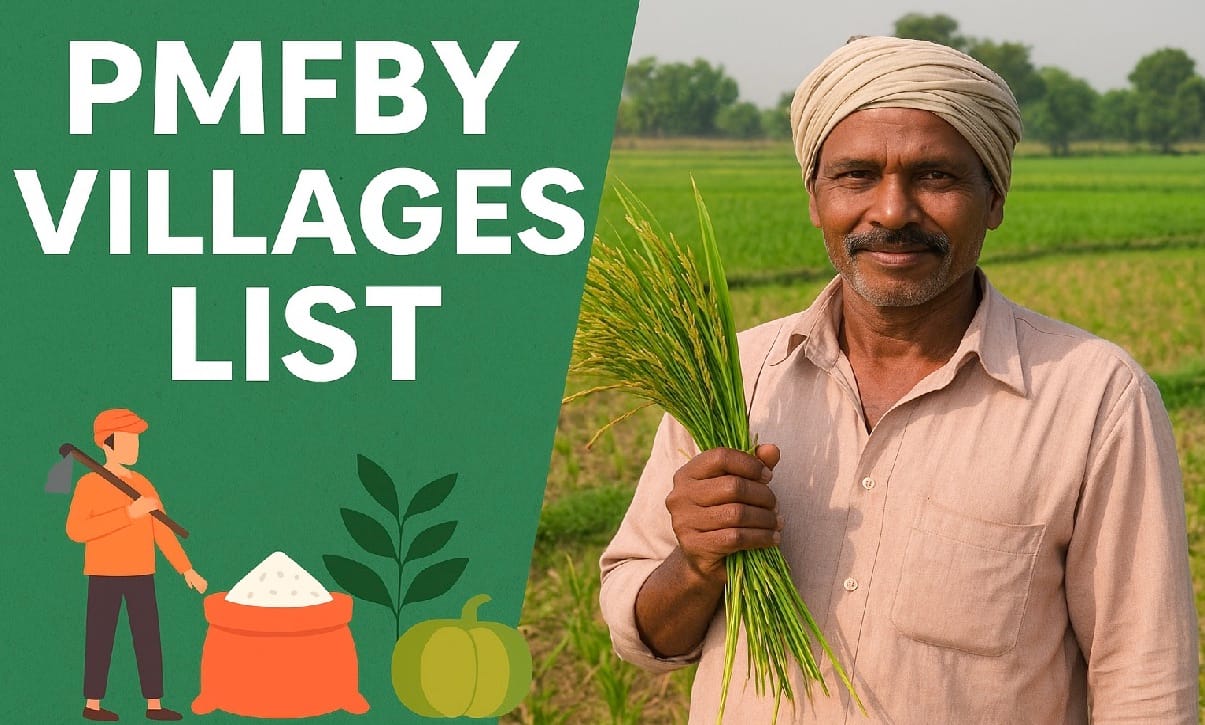
Launched on 18th February 2016, the Pradhan Mantri Fasal Bima Yojana (PMFBY) is a flagship crop insurance scheme of the Department of Agriculture, Cooperation and Farmers’ Welfare, under the Ministry of Agriculture. The scheme aims to provide affordable crop insurance to farmers across India, ensuring financial support during crop losses due to natural calamities, pests, and diseases. One of the important parts of PMFBY’s implementation is the village-level coverage. The PMFBY Villages List helps farmers check whether their village is included under the scheme for a given season and crop. This ensures that eligible farmers can apply for insurance on time and claim compensation if needed. PMFBY Villages List – Key Highlights Feature Details Scheme Name Pradhan Mantri Fasal Bima Yojana (PMFBY) Launch Date 18th February 2016 Ministry Ministry of Agriculture & Farmers’ Welfare Implementing Agencies State Governments, Insurance Companies, Banks Coverage Area Over 50 crore farmers and 50+ crops Villages List Purpose To notify eligible villages and crops for insurance How to Check State Agriculture Department or Insurance Company website Update Frequency Every cropping season (Kharif & Rabi) Official Website https://pmfby.gov.in What is the PMFBY Villages List? The PMFBY Villages List is the official record of all villages where the scheme is active for a specific cropping season. It is prepared and published by the state government and implementing insurance companies. The list changes every season depending on factors like crop type, weather conditions, and state notifications. By checking this list, farmers can: Confirm if their village is covered for PMFBY in the current season. Know the notified crops eligible for insurance in their area. Apply for crop insurance before the deadline. Why the Villages List is Important for Farmers Eligibility Check – Farmers can only apply for PMFBY if their village is included in the notified list. Timely Application – Knowing in advance helps farmers complete the application within the deadline. Crop-specific Coverage – The list also mentions which crops are covered for that season in the village. Avoiding Fraud – Prevents ineligible claims and ensures genuine farmers get the benefit. How to Check PMFBY Villages List Online Farmers can check the PMFBY Villages List in a few simple steps: STEP 1: Visit the Pradhan Mantri Fasal Bima Yojana official website – https://pmfby.gov.in. STEP 2: At the home page of website, Go to the "Farmer Corner" section. Pradhan Mantri Fasal Bima Yojana Home Page STEP 3: Select "Crop Insurance Villages List" or similar option. STEP 4: Choose your State, District, Block, and Season. STEP 5: Download or view the list to see if your village is covered. Benefits of PMFBY for Villages in the List Affordable Premiums – Farmers pay only 2% for Kharif crops, 1.5% for Rabi crops, and 5% for annual commercial/horticultural crops. Government Subsidy – Remaining premium is paid by the government; in certain states like Himachal Pradesh, J&K, and NE states, the government pays the full premium. Comprehensive Coverage – Protects against droughts, floods, pests, diseases, and even post-harvest losses. Quick Claims – Aim to settle claims within 2 months after harvest using technology like satellites and drones. Risks Covered Under PMFBY Yield Losses – Damage due to natural disasters, pests, and diseases. Prevented Sowing – Compensation up to 25% if sowing is not possible due to bad weather. Post-harvest Losses – Coverage up to 14 days for crops kept in the field for drying. Localised Calamities – Losses due to events like hailstorms or landslides in specific farms. Eligibility for Villages in the List Farmers (including tenant farmers and sharecroppers) growing notified crops in notified areas. Must have a valid land ownership document ...

Thalliki Vandanam Scheme Eligible List 2025 – Check Name & Status District-wise PDF

Thalliki Vandanam Scheme Eligible List

To uplift the standard of education among financially backward families, the Andhra Pradesh State Government launched the Thalliki Vandanam Scheme. This welfare initiative focuses on offering direct financial assistance of ₹15,000 to school students from poor households. The amount is transferred directly to the mother’s bank account through DBT (Direct Benefit Transfer), enabling students to continue their education without worrying about school fees or other educational expenses. As the scheme progresses, one of the most searched topics is the “Thalliki Vandanam Scheme Eligible List” — which includes the names of students shortlisted to receive the benefits. This article provides detailed information about the eligibility list, how it is prepared, who qualifies, and what comes next. Highlights of Thalliki Vandanam Scheme Eligible List Particulars Details Name of Scheme Thalliki Vandanam Scheme Launched By Government of Andhra Pradesh Launch Date 12th June 2025 Financial Assistance ₹15,000 per eligible student Mode of Transfer Direct Bank Transfer (DBT) to Mother Target Beneficiaries Students of Classes 1st to 12th Official Website To be announced Attendance Requirement Minimum 75% Eligibility for the Thalliki Vandanam Scheme? To be part of the eligible list, the student and their family must meet the following conditions: Family Income: Rural areas: Less than ₹10,000 per month Urban areas: Less than ₹12,000 per month Land Ownership: Less than 3 acres of wet land Less than 10 acres of dry land Or combined wet + dry land not exceeding 10 acres Electricity Usage: Monthly consumption less than 300 units (average of last 12 months) Housing Ownership: Should not own municipal property of 1000 sq. ft. or more Education Criteria: Must be studying in a recognized school from Class 1 to 12 Must maintain at least 75% attendance Other Requirements: Must have a Rice Card in the family Mother's bank account must be Aadhaar-seeded and NPCI-enabled Orphans and street children (via NGOs) are eligible after verification Who is Not Eligible? Students will be excluded from the eligible list if: They or their household members own four-wheelers, autos, taxis, or tractors The family owns municipal property over 1000 sq. ft. Any household member is a taxpayer Anyone in the household is a government employee or pensioner (except sanitation workers) The student is already availing reimbursement from ITI/Polytechnic/IIIT (RGUKT) Attendance is below 75% The student is not in the official household database (unless verified through GSWS) How is the Eligible List Prepared? The eligible list is generated after a rigorous verification process involving multiple departments: Data Collection: Done by School Education Department and Board of Intermediate Education, collecting details like: Student’s Aadhaar, caste, DOB, class, school, attendance Mother's Aadhaar, relationship, and bank details Data Matching and Cleaning: Duplicate and invalid entries removed Aadhaar validation of student and mother Household cross-verification using Civil Supplies and Household Survey Mother-Child Mapping: A key step where mother’s identity is linked to the student for DBT payments. Welfare Department Coordination: SC, ST, BC, Minority, and EWS departments share their scholarship data to avoid duplication or overlap. Thalliki Vandanam Eligibility List PDF Check Online at Official Webiste Complete process to check Thalliki Vandanam Scheme Eligibility list 2026 at official website https://gsws-nbm.ap.gov.in/ is given below step by step: STEP 1 : Visit Beneficiary Management Governmnet of Andhra Pradesh Official website https://gsws-nbm.ap.gov.in/NBM/Home/Main. STEP 2: On home page, click on "Login" button. STEP 3: Click on "Citizen Login" button. Scheme Eligibility STEP 4: Enter "Username" and "Captcha" code. STEP 5: Now click on "Sign In" button. STEP 6: After Login, click on "Scheme Eligibility" to check final eligible list. Documents Required Applicants must keep the following documents ready: Aadhaar Card of student and mother PAN ...

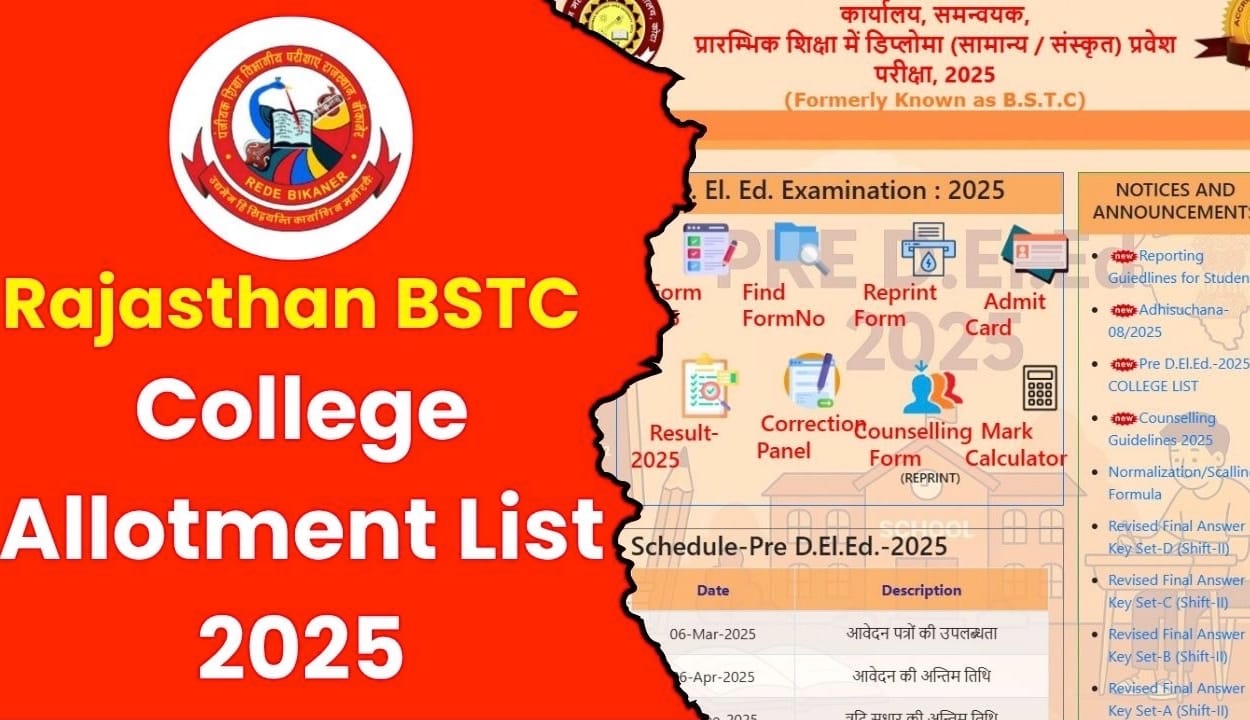
Rajasthan BSTC College Allotment List 2025 – Know Full Admission Process

Rajasthan BSTC College Allotment List

Rajasthan BSTC (Pre DElEd) 2025 college allotment list has been officially released by Vardhman Mahaveer Open University (VMOU), Kota, on June 26, 2025. Candidates who had registered for counselling till June 23, 2025, can now check their college allotment status on the official website. The university has now started the first phase of admission, and all selected candidates will need to complete further steps such as fee payment, reporting, and document verification within the given deadlines. Here’s everything you need to know about the Rajasthan BSTC counselling and allotment process. Important Dates for Rajasthan BSTC College Allotment List 2025 Event Date First Allotment List Release 26 June 2025 Fee Payment for Allotted College (INR 13,555) 26 June to 2 July 2025 Reporting at Allotted College 27 June to 3 July 2025 Document Verification by Institute 27 June to 3 July 2025 Download Provisional Admission Slip 27 June to 4 July 2025 Upward Movement Application Window 4 to 5 July 2025 Upward Movement Result 7 July 2025 Reporting for Upward Movement Allotment 7 to 9 July 2025 Rajasthan BSTC College Allotment List and Step-by-Step Admission Process Check Allotment Status: Visit predeledraj2025.in Login using your registered mobile number or login ID and password View the allotted college Pay Admission Fee: Amount: INR 13,555 Payment Mode: E-Mitra / Net Banking / Debit or Credit Card / UPI Payment Window: 26 June to 2 July 2025 Report to Allotted Institute: Physically visit the allotted Teacher Education Institute between 27 June and 3 July 2025 Bring all required original documents and soft copies Document Verification: Institutes will verify eligibility and documents Only successful candidates will get admission Download Provisional Admission Slip: After verification, login again and download your admission confirmation slip between 27 June and 4 July Upward Movement (Optional): If not satisfied with allotted college, apply for upward movement from 4 to 5 July Result will be declared on 7 July Report to newly allotted college by 9 July List of Documents Required for Counselling Class 10th and 12th mark sheets (original & soft copy) Recent passport-size photograph Caste certificate (if applicable) Domicile/Residential certificate Relevant sub-category certificate (Widow, Divorcee, PWD, Ex-serviceman, etc.) Rajasthan BSTC 2025 Admission Highlights Particulars Details Exam Name Rajasthan Pre DElEd (BSTC) 2025 Conducting Body VMOU, Kota Exam Date 1 June 2025 Result Date 14 June 2025 Total Registered Candidates 6,04,692 Total Appeared 5,49,161 Official Website predeledraj2025.in

New Tax Regime Exemption List PDF AY 2025-26

New Tax Regime Exemption List

Section 115BAC of the Income Tax Act introduced a new tax regime offering concessional tax slabs in exchange for fewer deductions and exemptions. Effective from FY 2023-24, this regime is now the default for individuals and Hindu Undivided Families (HUFs). However, taxpayers can still choose the old regime by filing Form 10-IEA before the due date of income tax return. Understanding the new tax regime exemption list is crucial for effective tax planning. Here’s a complete breakdown of what’s allowed, what's not, and how to benefit under this structure. New Tax Regime Exemption List Highlights Feature Details Applicable Section 115BAC Applicable From FY 2020-21 (Revised in FY 2023-24 and FY 2024-25) Default Regime Yes (from FY 2023-24) Option to switch Allowed via Form 10-IEA (before ITR due date) Rebates ₹25,000 (FY 2024-25), ₹60,000 (FY 2025-26) Slab Rates Concessional (Up to 30%) Deductions allowed Very limited What is Allowed Under New Tax Regime? Though most exemptions are removed, some key deductions and allowances are still permitted under the new tax regime: Standard Deduction: ₹50,000 (Allowed from FY 2023-24 onwards) EPF (Employer Contribution): Deduction on employer’s contribution (within limits under Section 80CCD(2)) NPS (Employer Contribution): Under Section 80CCD(2), not individual contribution Agniveer Corpus Fund Contribution: Deduction allowed Gratuity & Leave Encashment: Tax-free to the specified limit Retrenchment Compensation & VRS: Exempted as per limits Commutation of Pension: Partially exempt Voluntary Retirement: As per existing limits Interest from Savings Account: Up to ₹40,000 (for senior citizens) Transport Allowance for Disabled: Exempt Not Allowed Deductions and Exemptions Many commonly claimed deductions under the old tax regime are not available under the new system: House Rent Allowance (HRA) Leave Travel Allowance (LTA) Section 80C (Investments like PPF, LIC, ELSS, etc.) Section 80D (Health Insurance Premiums) Home Loan Interest (Section 24 for self-occupied property) Section 80G (Donations) Education Loan Interest (Section 80E) Savings Account Interest (Section 80TTA/TTB for non-senior citizens) Revised Slabs Under New Tax Regime (FY 2025-26) Income Slab Tax Rate Up to ₹4 lakh NIL ₹4 lakh - ₹8 lakh 5% ₹8 lakh - ₹12 lakh 10% ₹12 lakh - ₹16 lakh 15% ₹16 lakh - ₹20 lakh 20% ₹20 lakh - ₹24 lakh 25% Above ₹24 lakh 30% Note: Rebate of ₹60,000 applicable if income is up to ₹7 lakh. For more details, update and PDF form, visit Income Tax Department Government of India official website https://www.incometax.gov.in/iec/foportal/help/individual/return-applicable-1 Old and New Tax Regime Difference Income Slabs Old Tax Regime (FY 2024-25) New Tax Regime (FY 2024-25) Age < 60 years & NRIs Age 60–80 years Age > 80 years Up to ₹2.5 lakhs NIL NIL NIL NIL ₹2.5 lakhs – ₹3 lakhs 5% NIL NIL NIL ₹3 lakhs – ₹5 lakhs 5% 5% NIL 5% ₹5 lakhs – ₹6 lakhs 20% 20% 20% 5% ₹6 lakhs – ₹7 lakhs 20% 20% 20% 5% ₹7 lakhs – ₹7.5 lakhs 20% 20% 20% 10% ₹7.5 lakhs – ₹9 lakhs 20% 20% 20% 10% ₹9 lakhs – ₹10 lakhs 20% 20% 20% 10% ₹10 lakhs – ₹12 lakhs 30% 30% 30% 15% ₹12 lakhs – ₹12.5 lakhs 30% 30% 30% 20% ₹12.5 lakhs – ₹15 lakhs 30% 30% 30% 20% Above ₹15 lakhs 30% 30% 30% 30%